CPA2
RECOMMENDED
MITIGATION
FOR
POTENTIAL
PROJECT
IMPACTS
71
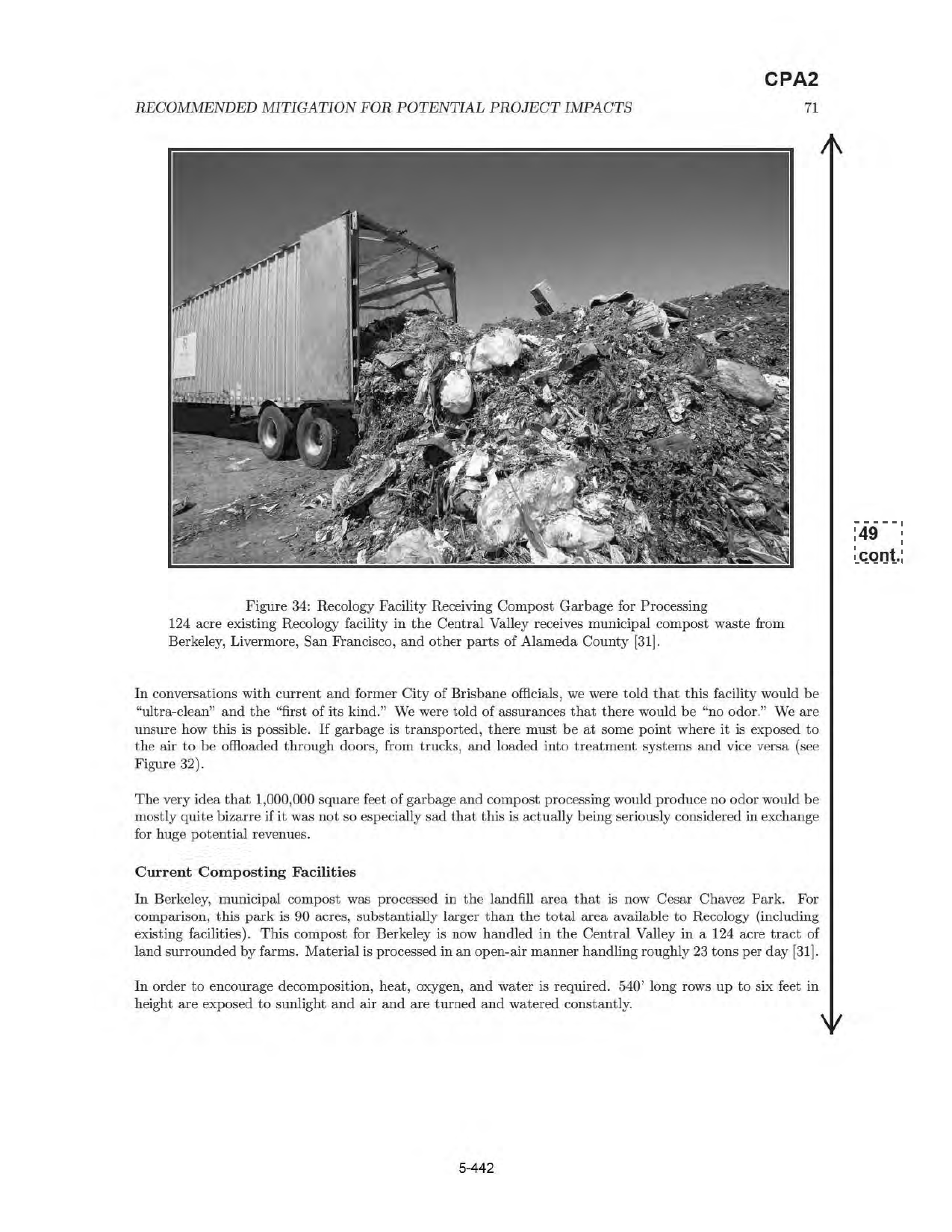
Figure
34:
Recology
Facility
Receiving
Compost
Garbage
for
Processing
124
acre
existing
Recology
facility
in
the
Central
Valley
receives
municipal
compost
waste
from
Berkeley,
Livermore,
San
Francisco,
and
other
parts
of
Alameda
County
[31].
In
conversations
with
current
and
former
City
of
Brisbane
officials,
we
were
told
t
hat
this
facility
would
be
"ultra-clean"
and
the
"first
of
its
kind."
We
were
told
of
assurances
that
there
would
be
"no
odor."
We
are
unsure
how
this
is
possible.
If
garbage
is
transported,
t
here
must
be
at
some
point
where
it
is
exposed
to
the
air
to
be
offloaded
through
doors,
from
trucks,
and
loaded
into
treatment
systems
and
vice
versa
(see
Figure
32).
The
very
idea
that
1,000,000
square
feet
of
garbage
and
compost
processing
would
produce
no
odor
would
be
mostly
quite
bizarre
if
it
was
not
so
especially
sad
that
this
is
actually
being
seriously
considered
in
exchange
for
huge
potential
revenues.
Current
Composting
Facilities
In
Berkeley,
municipal
compost
was
processed
in
the
landfill
area
that
is
now
Cesar
Chavez
Park.
For
comparison,
this
park
is
90
acrei:;,
substantially
larger
than
t
he
total
area
available
to
Recology
(including
existing
facilities).
This
compost
for
Berkeley
is
now
handled
in
the
Central
Valley
in
a
124
acre
tr
act
of
land
surrounded
by
farms.
Material
is
processed
in
an
open-air
manner
handling
roughly
23
tons
per
day
[31].
In
order
to
encourage
decomposition,
heat,
oxygen,
and
water
is
required.
540'
long
rows
up
to
six
feet
in
height
are
exposed
to
sunlight
and
air
and
are
turned
and
watered
constantly.
5-442