CPA2
RECOMMENDED
MITIGATION
FOR
POTENTIAL
PROJECT
IMPACTS
62
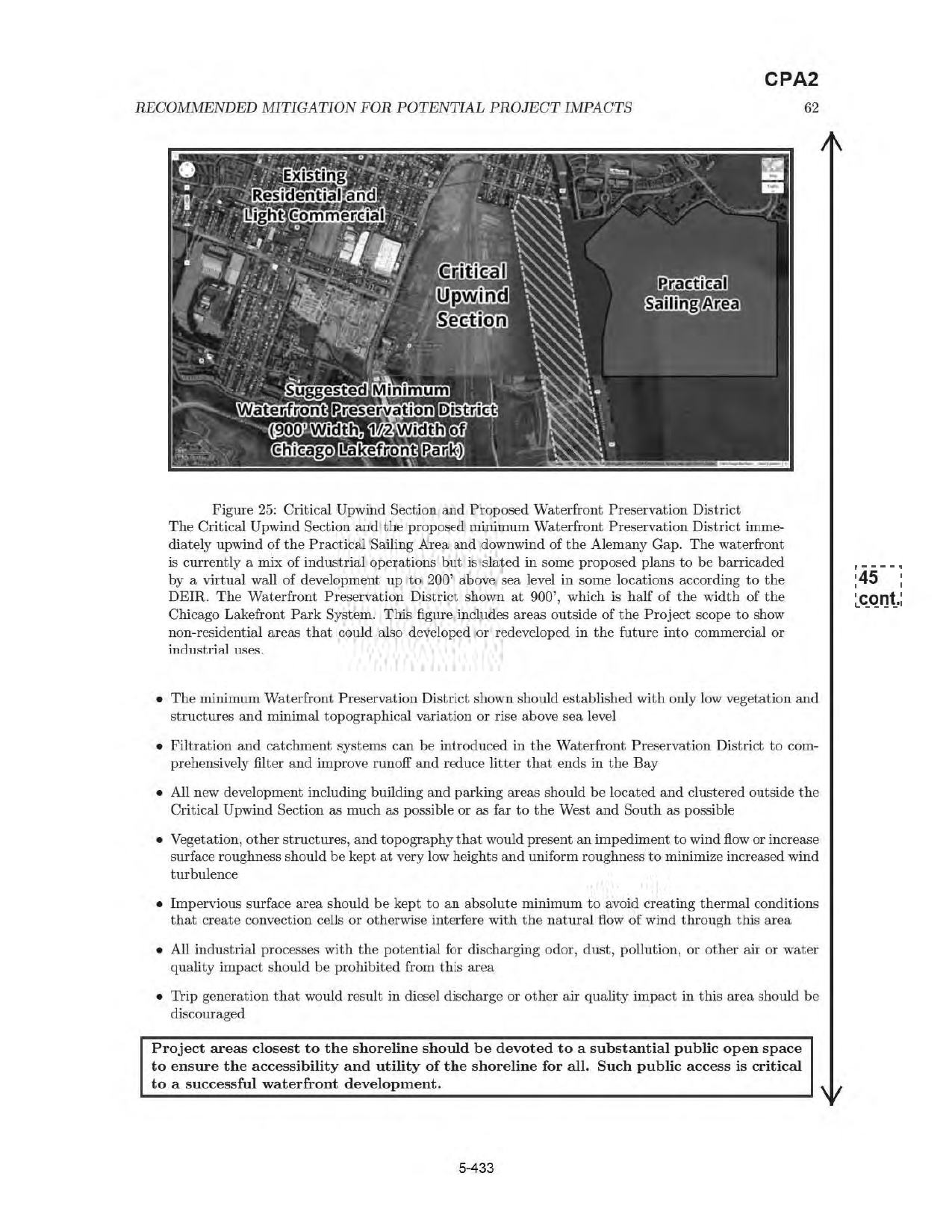
Figure
25:
Critical
Upwind
Section
and
Proposed
Waterfront
Preservation
District
The
Critical
Upwind
Section
and
the
proposed
minimum
Waterfront
Preservation
District
imme-
diately
upwind
of
the
Practical
Sailing
Area
and
downwind
of
the
Alemany
Gap.
The
waterfront
is
currently
a
mix
of
industrial
operations
but
is
slated
in
some
proposed
plans
to
be
barricaded
by
a
virtual
wall
of
development
up
to
200'
above
sea
level
in
some
locations
according
to
the
DEIR.
The
Waterfront
P
reservation
District
shown
at
900',
which
is
half
of
the
width
of
the
Chicago
Lakefront
Park
System.
This
figure
includes
areas
outside
of
the
Project
scope
to
show
non-residential
areas
that
could
also
developed
or
redeveloped
in
the
future
into
commercial
or
industria.l
uses.
•
The
minimum
Waterfront
Preservation
District
shown
should
established
with
only
low
vegetation
and
structures
and
minimal
topographical
variation
or
rise
above
sea
level
•
Filtration
and
catchment
systems
can
be
introduced
in
the
Waterfront
Preservation
District
to
com-
prehensively
filter
and
improve
runoff
and
reduce
litter
t
hat
ends
in
the
Bay
•
All
new
development
including
building
and
parking
areas
should
be
located
and
clustered
outside
t
he
Critical
Upwind
Section
as
much
as
possible
or
as
far
to
t
he
West
and
South
as
possible
•
Vegetation,
other
structures,
and
topography
t
hat
would
present
an
impediment
to
wind
flow
or
increase
surface
roughness
should
be
kept
at
very
low
heights
and
uniform
roughness
to
minimize
increased
wind
turbulence
•
Impervious
surface
area
should
be
kept
to
an
absolute
minimum
to
avoid
creating
thermal
conditions
that
create
convection
cells
or
otherwise
interfere
with
the
natural
flow
of
wind
through
this
area
•
All
industrial
processes
with
the
potential
for
discharging
odor,
dust,
pollution,
or
other
air
or
water
quality
impact
should
be
prohibited
from
this
area
•
Trip
generat
ion
that
would
result
in
diesel
discharge
or
other
air
quality
impact
in
this
area
should
be
discouraged
Project
areas
closest
to
the
shoreline
should
be
devoted
to
a
substantial
public
open
space
to
e
nsure
the
accessibility
and
utility
of
the
s
hore
line
for
all.
Such
public
access
is
critical
to
a
successful
waterfront
d
evelopment.
5-433