OSEC
Open
Space
&
Ecology
CEQA
Comments
on
Brisbane
Baylands
Draft
EIR
-
2013
By
weakening
sensitive
vegetation,
ozone
makes
plants
more
susceptible
to
disease,
pests,
and
environmental
stresses.
•
Ground-level
ozone
has
been
shown
to
reduce
agricultural
yields
for
many
economically
important
crops
(e.g.,
soybeans,
kidney
beans,
wheat,
and
cotton).
•
The
effects
of
ground-level
ozone
on
long-lived
species
such
as
trees
are
believed
to
add
up
over
many
years
so
that
whole
forests
or
ecosystems
can
be
affected.
For
example,
ozone
can
adversely
impact
ecological
functions
such
as
water
movement,
mineral
nutrient
cycling,
and
habitats
for
various
animal
and
plant
species.
•
Ground-level
ozone
can
kill
or
damage
leaves
so
that
they
fall
off
the
plants
too
soon
or
become
spotted
or
brown.
These
effects
can
significantly
decrease
the
natural
beauty
of
an
area,
such
as
in
national
parks
and
recreation
areas.
•
One
of
the
key
components
of
ozone,
nitrogen
oxides,
contributes
to
fish
kills
and
algae
blooms
in
sensitiv
waterways,
such
as
the
Chesapeake
Bay.
http://www.mnn.com/health/fitness-well-being/stories/ozone-health-and-environmental-effects
Ground-level
ozone
also
damages
vegetation
and
ecosystems.
In
the
United
States
alone,
ozone
is
responsible
for
an
•
estimated
$500
million
in
reduced
crop
production
each
year.
Repeated
exposure
may
permanently
scar
lung
tissue.
http://www.iowadnr.gov/Environment/AirQuality/CommonAirPollutants/Ozone/GroundlevelOzoneEffects.aspx
Environmental
Effects
Ozone
damages
vegetation
and
ecosystems
by
inhibiting
the
ability
of
plants
to
open
the
microscopic
pores
on
their
leaves
to
breathe.
It
interferes
with
the
photosynthesis
process
by
reducing
the
amount
of
carbon
dioxide
the
plants
can
process
and
release
as
oxygen.
Elevated
levels
of
ozone
lead
to
reduced
agricultural
crop
and
commercial
forest
yields,
reduced
growth
and
survivability
of
tree
seedlings,
and
increased
susceptibility
to
diseases,
pests
and
other
stresses
such
as
harsh
weather.
liBR
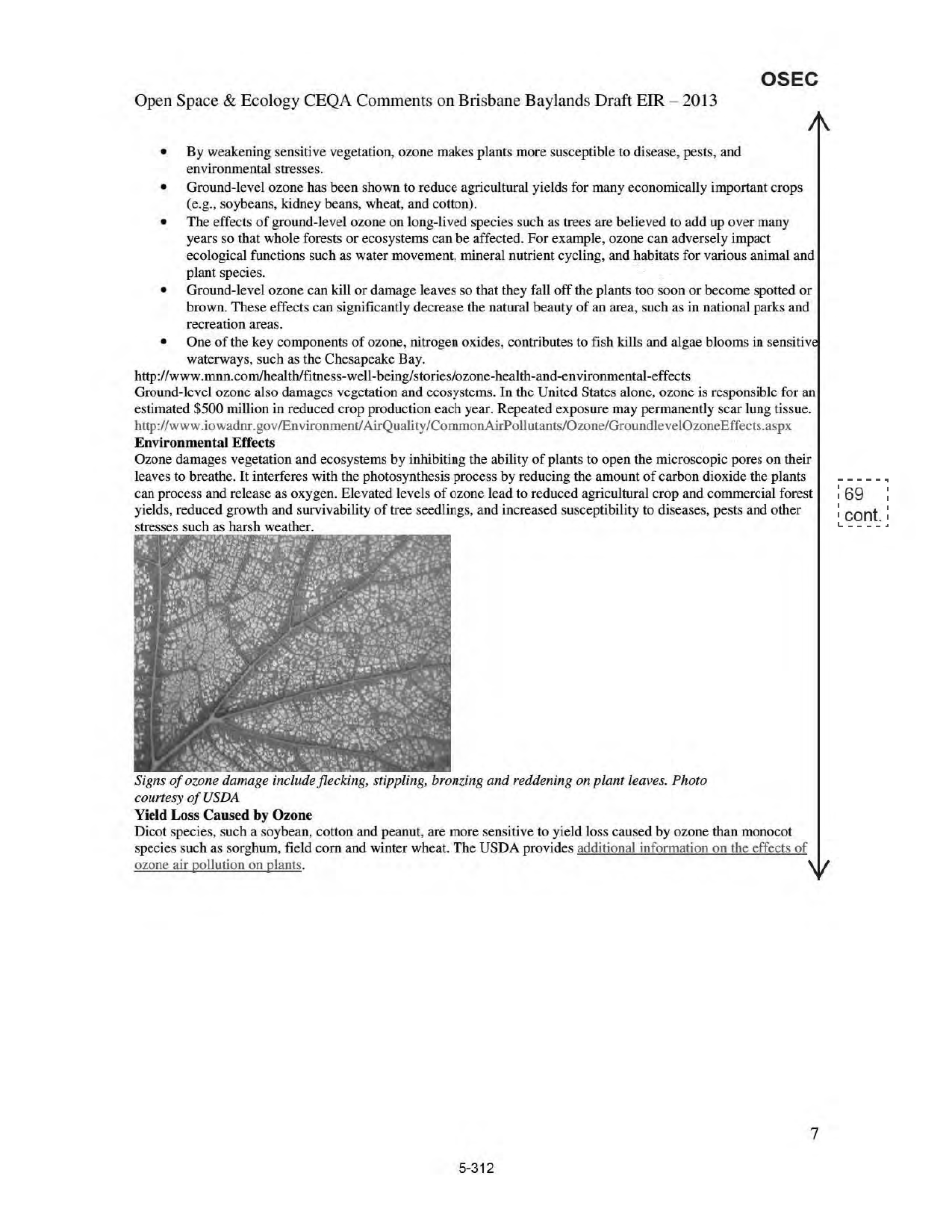
Signs
of
ozone
damage
include
flecking,
stippling,
bronzing
and
reddening
on
plant
leaves.
Photo
courtesy
of
USDA
Yield
Loss
Caused
by
Ozone
Dicot
species,
such
a
soybean,
cotton
and
peanut,
are
more
sensitive
to
yield
loss
caused
by
ozone
than
monocot
species
such
as
sorghum,
field
com
and
winter
wheat.
The
USDA
provides
additional
information
on
the
effects
of
ozone
air
pollution
on
plants.
7
5-312