BCC
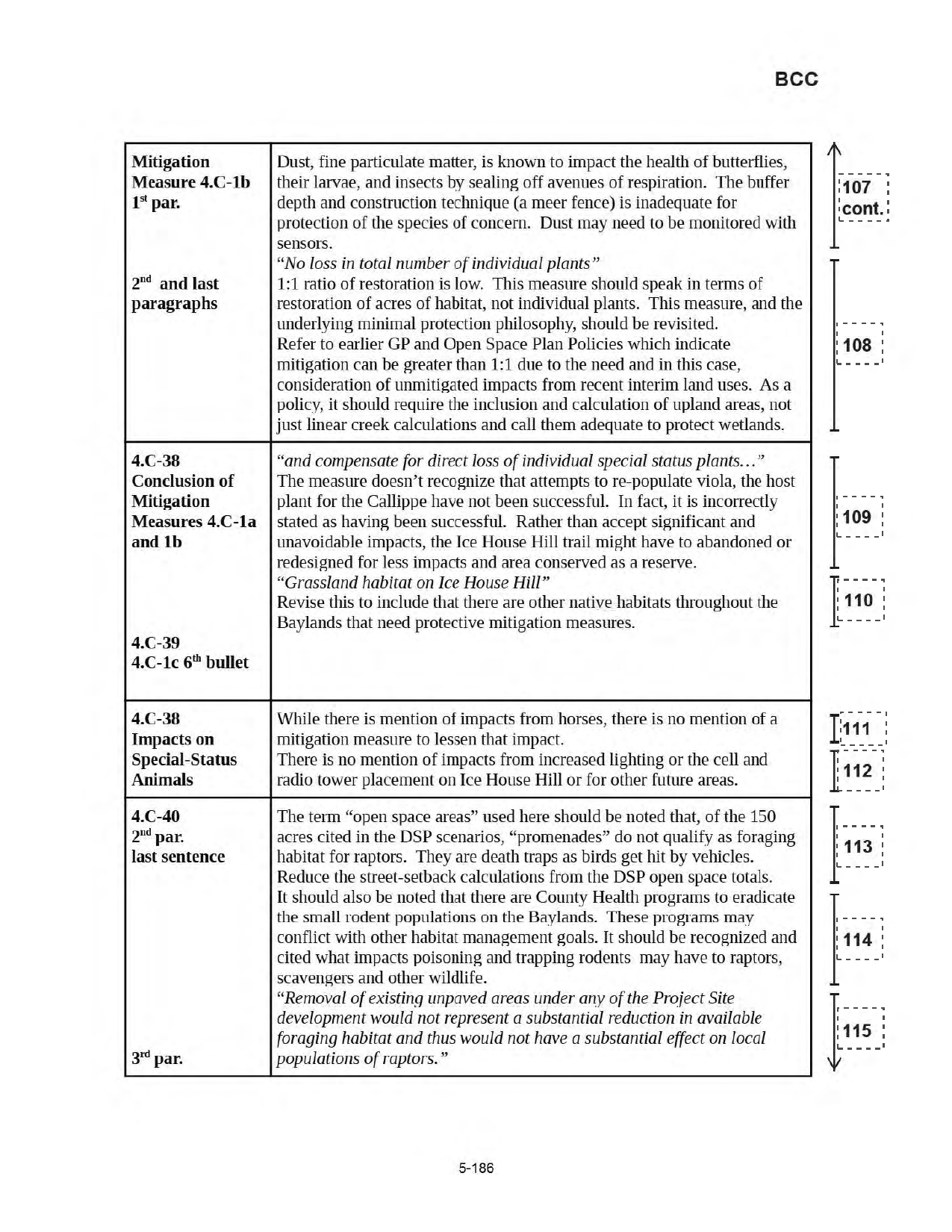
Mitigation
Measure
4.C-lb
l5
1
par.
Dust,
fine
particulate
matter,
is
known
to
impact
the
health
of
butterflies,
their
larvae,
and
insects
by
sealing
off
avenues
of
respiration.
The
buffer
depth
and
construction
technique
(a
meer
fence)
is
inadequate
for
protection
of
the
species
of
concern.
Dust
may
need
to
be
monitored
with
sensors.
"No
loss
in
total
number
of
individual
plants"
2nd
and
last
paragraphs
1:1
ratio
of
restoration
is
low.
This
measure
should
speak
in
terms
of
restoration
of
acres
of
habitat,
not
individual
plants.
This
measure,
and
the
underlying
minimal
protection
philosophy,
should
be
revisited.
Refer
to
earlier
GP
and
Open
Space
Plan
Policies
which
indicate
mitigation
can
be
greater
than
1:1
due
to
the
need
and
in
this
case,
consideration
of
unmitigated
impacts
from
recent
interim
land
uses.
As
a
policy,
it
should
require
the
inclusion
and
calculation
of
upland
areas,
not
just
linear
creek
calculations
and
call
them
adequate
to
protect
wetlands.
4.C-38
Conclusion
of
Mitigation
Measures
4.C-la
and
lb
"and
compensate
for
direct
loss
of
individual
special
status
plants
...
"
The
measure
doesn't
recognize
that
attempts
to
re-populate
viola,
the
host
plant
for
the
Callippe
have
not
been
successful.
In
fact,
it
is
incorrectly
stated
as
having
been
successful.
Rather
than
accept
significant
and
unavoidable
impacts,
the
Ice
House
Hill
trail
might
have
to
abandoned
or
redesigned
for
less
impacts
and
area
conserved
as
a
reserve.
"Grassland
habitat
on
Ice
House
Hill"
Revise
this
to
include
that
there
are
other
native
habitats
throughout
the
Baylands
that
need
protective
mitigation
measures.
4.C-39
4.C-lc
6th
bullet
4.C-38
Impacts
on
Special-Status
Animals
4.C-40
2nd
par.
last
sentence
While
there
is
mention
of
impacts
from
horses,
there
is
no
mention
of
a
mitigation
measure
to
lessen
that
impact.
There
is
no
mention
of
impacts
from
increased
lighting
or
the
cell
and
radio
tower
placement
on
Ice
House
Hill
or
for
other
future
areas.
The
term
"open
space
areas"
used
here
should
be
noted
that,
of
the
150
acres
cited
in
the
DSP
scenarios,
"promenades"
do
not
qualify
as
foraging
habitat
for
raptors.
They
are
death
traps
as
birds
get
hit
by
vehicles.
Reduce
the
street-setback
calculations
from
the
DSP
open
space
totals.
It
should
also
be
noted
that
there
are
County
Health
programs
to
eradicate
the
small
rodent
populations
on
the
Baylands.
These
programs
may
conflict
with
other
habitat
management
goals.
It
should
be
recognized
and
cited
what
impacts
poisoning
and
trapping
rodents
may
have
to
raptors,
scavengers
and
other
wildlife.
3n1
par.
"Removal
of
existinq
unpaved
areas
under
any
of
the
Project
Site
development
would
not
represent
a
substantial
reduction
in
available
foraging
habitat
and
thus
would
not
have
a
substantial
effect
on
local
populations
of
raptors."
5-186