3.
Revisions
to
the
Text
of
the
Draft
EIR
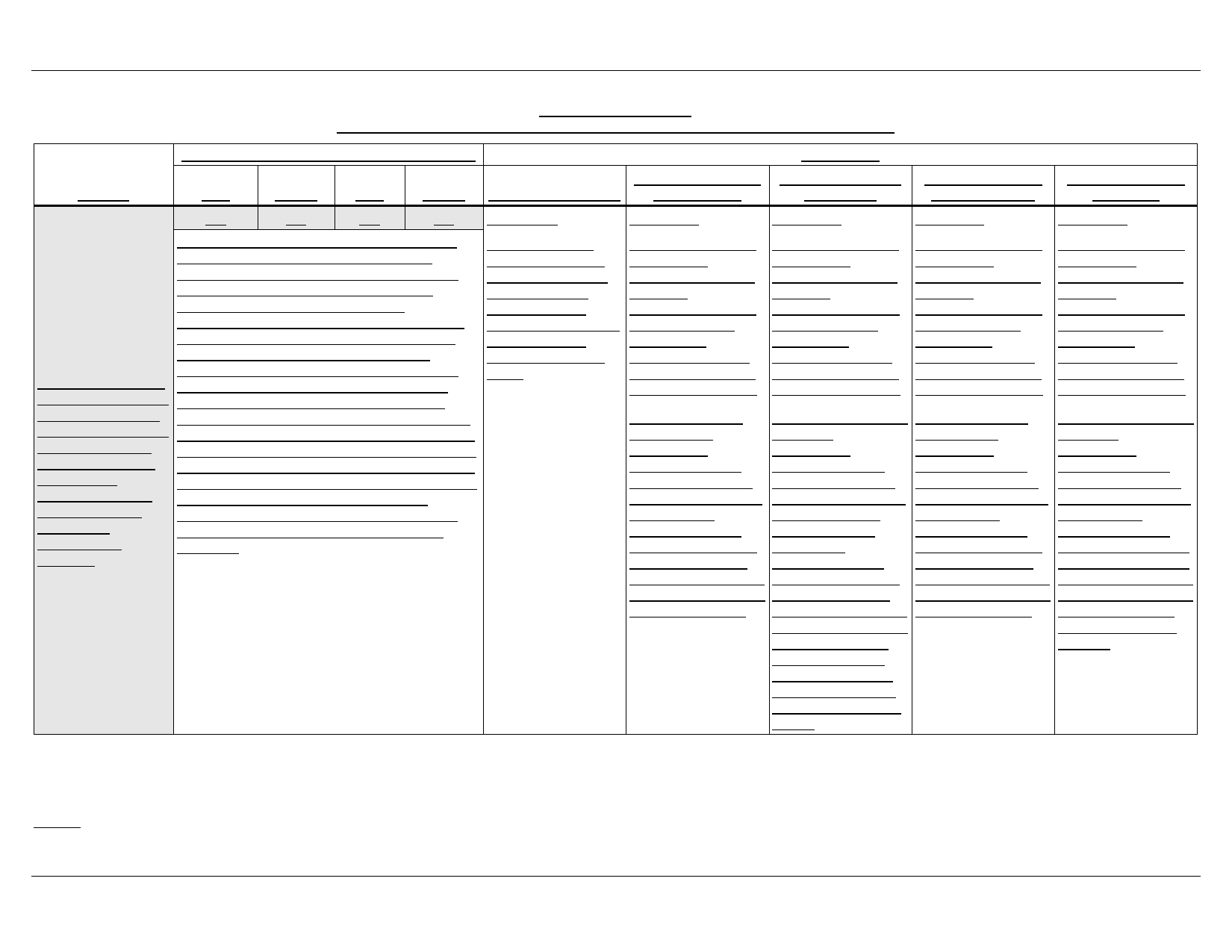
TABLE
5.8
(Continued)
COMPARISON
OF
IMPACTS
FOR
PROJECT
SITE
SCENARIOS
AND
ALTERNATIVES
Proposed
Project
Site
Development
Scenario
Impacts
DSP
SM
DSP-V
SM
CPP
SM
CPP-V
SM
No
Project–General
No
Project–No
Build
Plan
Buildout
Impact:
N/A
Existing
uses
and
structures
would
be
exposed
to
the
risks
that
are
currently
present.
No
new
exposure
would
result
because
no
new
development
would
occur.
Impact:
SM
Due
to
similar
overall
development
footprints
and
similar
mitigation
requirements,
overall
impacts
would
be
similar
to
the
scenarios
and
other
alternatives
involving
building
construction.
However,
because
the
amount
of
development
(approximately
2.0
million
s.f.)
would
be
substantially
less
than
the
scenarios,
substantially
fewer
buildings,
employees
and
visitors,
and
no
onsite
residents
would
be
subject
to
less
than
significant
hazards.
Alternatives
Renewable
Energy
Generation
Impact:
SM
Due
to
similar
overall
development
footprints
and
similar
mitigation
requirements,
overall
impacts
would
be
similar
to
the
scenarios
and
other
alternatives
involving
building
construction.
However,
because
the
amount
of
development
(approximately
1.9
million
s.f.)
would
be
substantially
less
than
the
scenarios
and
reduced
intensity
alternatives,
substantially
fewer
buildings,
employees
and
visitors,
and
no
onsite
residents
would
be
subject
to
less
than
significant
hazards.
Also,
no
structures
designed
for
human
occupancy
would
be
located
on
the
former
landfill.
Reduced
Intensity
Non-Residential
Impact:
SM
Due
to
similar
overall
development
footprints
and
similar
mitigation
requirements,
overall
impacts
would
be
similar
to
the
scenarios
and
other
alternatives
involving
building
construction.
However,
because
the
amount
of
development
(approximately
5.8
million
s.f.)
would
be
substantially
less
than
the
scenarios,
substantially
fewer
buildings,
employees
and
visitors,
and
no
onsite
residents
would
be
subject
to
less
than
significant
hazards.
Reduced
Intensity
Mixed
Use
Impact:
SM
Due
to
similar
overall
development
footprints
and
similar
mitigation
requirements,
overall
impacts
would
be
similar
to
the
scenarios
and
other
alternatives
involving
building
construction.
However,
because
the
amount
of
development
(approximately
6.3
million
s.f.)
would
be
substantially
less
than
the
scenarios,
substantially
fewer
buildings,
employees,
visitors,
and
residents
(compared
to
the
DSP
and
DSP-V
scenarios)
would
be
subject
to
less
than
significant
hazards.
While
preliminary
ground
settlement
estimates
have
been
made,
final
site-specific
ground
settlement
calculations
are
not
available
at
this
time,
and
cannot
be
determined
until
more
detailed
grading
plans
for
site-specific
development
are
available.
Because
it
is
known
that
ground
settlement
would
occur,
mitigation
measures
require
that
(1)
all
structures
be
designed
and
constructed
in
conformance
with
Impact
4.E-6:
Would
the
most
recently
adopted
California
Building
the
Project
be
located
Code,
which
sets
performance
standards
for
on
a
geologic
unit
or
building
design
in
areas
undergoing
compaction,
soil
that
is
unstable
or
and
(2)
that
all
final
design
and
engineering
plans
that
would
become
be
submitted
by
a
licensed
geotechnical
engineer
unstable
as
a
result
and
be
subject
to
review
and
approval
by
the
City
of
the
Project
Engineer
to
confirm
that
Project
Site
development
including
landslide,
meets
applicable
performance
standards.
lateral
spreading,
Implementation
of
this
mitigation
would
reduce
subsidence,
impacts
to
a
less-than-significant
level
for
all
liquefaction
or
scenarios.
collapse?
Impacts:
SU
–
Significant
Unavoidable
Impact
No
Impact
Brisbane
Baylands
Final
EIR
SM
–
Significant,
but
Mitigable
Impact
N/A
–
Not
Applicable
LTS
–
Less
than
Significant
Impact
3-166
May
2015